A Picture-Label Recycling Station for the Whole Family
October 12, 2026 · 6 min read
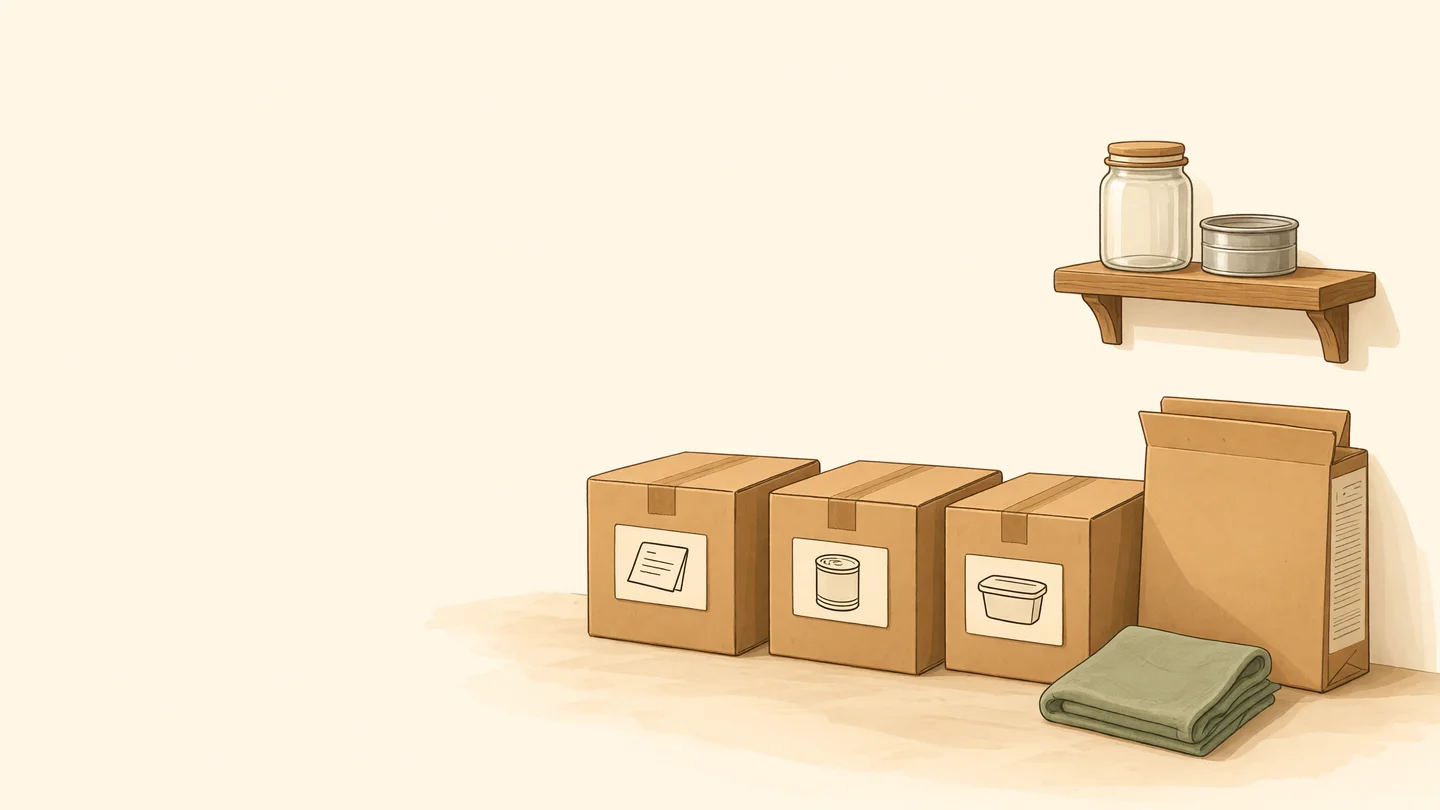
The cardboard seems to arrive faster than anyone can fold it. Delivery boxes lean against the door, cereal boxes pile up by the bin, and somebody always asks, again, whether the yogurt tub goes in the blue one or not.
A recycling sorting station can turn that pile into a small, shared job. You set it up once: a few boxes with picture labels and one shelf for anything that needs a grown-up. After that, kids can flatten, gather and match, while you handle the trickier bits. Here's a gentle way to try it this week.
Gather Your Materials
You likely have everything already. Find three or four sturdy boxes or tubs, one for each type of recycling your area collects. Many families start with paper and cardboard, cans, and plastic containers, but your local recycling guidance is the real guide here. Check your council or collection service's list before you label anything, because what's accepted varies from place to place.
- Three or four boxes or tubs that fit your space
- Paper, a marker and tape for picture labels
- A shelf or high spot for grown-up items
- A dish rack or tray for rinsed containers to drip dry
- An optional kitchen timer for a short, cheerful sorting session
The grown-up shelf matters. Glass jars, cans with sharp lids and anything you're unsure about go there, out of small hands' reach, until a grown-up sorts them. The kitchen timer and any music are home props, not part of the app, and you can skip them entirely.
Make the Picture Labels Together
This is the fun part of setup. Sit down with your kids and draw a simple picture for each box: a newspaper, a tin can, a milk jug. Younger children can color them in, and older kids can add the words underneath. Pictures give a child who isn't reading yet a way to match an item to its box.
If drawing feels like too much, cut a picture from an old flyer or tape a clean example to the front, like a flattened cracker box on the paper bin. Keep labels big and plain. You might add a small sign on the grown-up shelf too, maybe a picture of a jar with a little star, so everyone knows that spot is for someone taller.
Put the station somewhere easy to reach: near the back door, in a corner of the kitchen, or wherever the recycling already gathers. If your local guidance changes, just redraw a label. It's meant to be simple and changeable.
Who Does What
Children can do a lot here. They can flatten cardboard boxes by pulling open the tabs and pressing them flat. They can gather paper from around the house: junk mail, drawing scraps, empty tissue boxes. And they can match clean, rinsed items to the right box using the picture labels, following your area's rules.
Grown-ups keep the jobs that need more care. That means handling glass, cans with sharp lids, anything broken, and taking bins out to the street on collection day. Rinsing containers can go either way depending on your kids and your sink, so decide what feels right.
A sorting session might last about ten minutes. Set the kitchen timer if your family likes that, put on a song, and see how much you can fold and match before it rings. When the timer rings, you're done for the day, even if a box or two is left for next time.
Recording It in Chorzle
Once the station exists, sorting can become an ordinary repeating chore. In Chorzle, a grown-up can create the chore, assign it to one child or several, and choose a repeating schedule, like twice a week or the evening before collection day. You can give it a Chorzle point value, or mark it as simply expected, whichever suits your household.
Kids can mark their sorting done. Chores may require grown-up approval, and when this one does, the points arrive after you approve it, not the moment it's checked off, which gives you a chance to peek at the boxes first. It's worth deciding ahead whether you want approval for this chore. You can see current details on the features page.
For rewards, keep it modest and experience-based. A grown-up creates rewards with point costs, and a child might spend their own earned Chorzles on choosing the song for the next sorting session, picking tonight's bedtime story, or naming a pretend theme for the next sort, like a busy post office or a pirate ship's hold. Snacks, cuddles, bedtime care and family time stay available no matter what.
Adapting for Little Kids and Teens
Young children often enjoy the matching itself. Hand them one clean item at a time and let them find its picture. They might be the official paper gatherers, walking a small bag around the house to collect mail and scraps. A parent can choose the Young kids experience in Chorzle, which keeps the picture-first view with large picture buttons, though some detail screens still have text and may need a grown-up nearby. There's more on the kids' side of Chorzle.
Teens can take on more of the whole flow. They might rinse containers, break down bigger delivery boxes with your guidance, check the local collection calendar, or keep the picture labels updated when rules change. If your teen is ready and you're comfortable, they could help carry bins to the street with you.
Siblings can share the work without sharing a score: each child has their own chores and their own earned Chorzles. One child might gather while another flattens, and you can swap jobs next time.
The Tired-Day Version
Some evenings, nobody has ten minutes of folding in them. That's normal, especially as the days get darker. As an optional shorter alternative, try doing less together: everyone carries one armful to the station and drops it in the right box, and that's it. Or flatten just three boxes side by side while you chat.
A small pile sorted together is still a pile sorted together.
You can also simply stop. If the station isn't working for your family right now, move the boxes, simplify to one bin for paper, or take a break. Don't assume anything about how a skipped sort shows up; just pick it back up when you're ready. You can find more gentle ideas over on The Buzz.
Here's one small thing to try this week: find one empty box, draw a picture of a newspaper on it, and ask your kids to fill it with paper from around the house. That's your station's first bin. If it goes well, add another box next week, and maybe set up a repeating sorting chore. If you're curious about Chorzle for your family, the download page shows current signup availability. Either way, the cardboard pile is a little smaller.
Share the work at home
Chorzle gives your family one warm, shared place for the chore list. New accounts are closed. Join the waitlist for an opening update.
Join the waitlist