When Chores Meet a Hard Refusal
July 13, 2026 · 6 min read
Late September afternoons arrive with heavy backpacks, changing classroom routines, and tired legs. You glance around the living room at scattered sneakers, jackets dropped in the entryway, and lunchboxes still zipped on the counter. You gently ask someone to hang up their coat or put their sneakers away in the cubby. Instead of movement, you meet folded arms, a loud groan, or an outright refusal to do a single chore.
It is a familiar moment in every family home. In that brief second between the request and the standoff, the whole temperature of the kitchen can climb fast. When a child pushes back, it rarely means your household system is broken. Most often, it simply means everyone has run out of steam, and the routine needs a steady, calm pause rather than an argument.
Pressing the Pause Button in Real Life
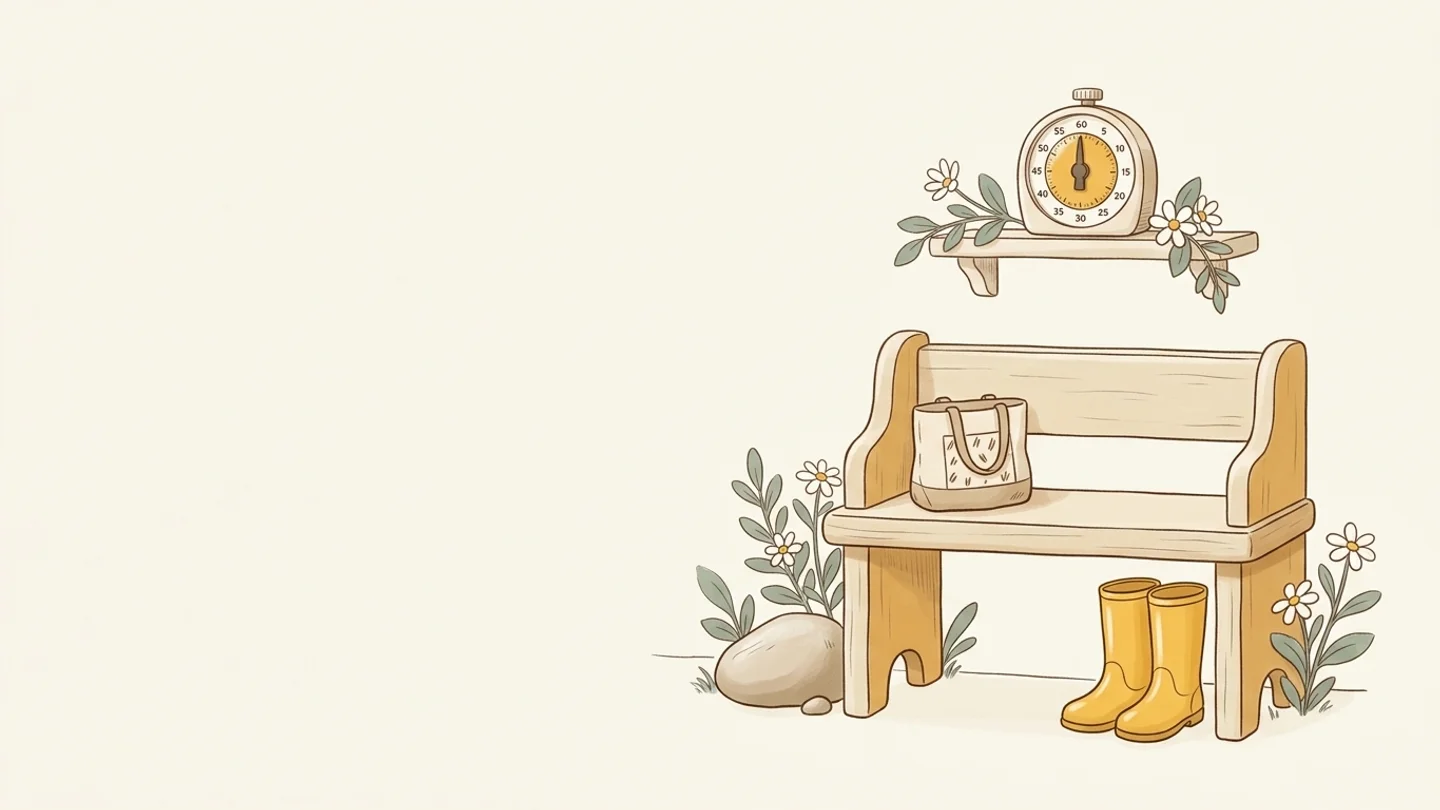
When pushback happens, the fastest way to lower the tension is to step sideways out of the confrontation. You do not have to accept disrespectful behavior, but you also do not have to resolve the entire chore list in the heat of frustration. Take a slow breath, keep your voice quiet, and announce a five minute break for everyone. A mechanical kitchen timer set on the counter gives a neutral signal that the household is pressing pause, without turning your phone into an extra distraction.
During those five minutes, step away from the work completely. Offer a small cup of water or a sliced apple. Sit on the rug together, or let your child sit quietly without peppered questions about why the shoes were left out. Affection, basic care, snacks, and presence are unconditional parts of family life. They are never tied to points, badges, or finished tasks. Use the pause simply as time away from the task. Notice whether anyone wants company, quiet, or help before deciding together what to try next.
Shrinking the Ask to an Easy First Step
Big chore lists can feel like an insurmountable wall when someone is tired. When a child flatly refuses to clean the entryway, they might be looking at seven scattered items and feeling overwhelmed. You can help by radically shrinking the task down to one small, concrete motion that takes less than thirty seconds.
Instead of asking for the whole hallway reset, offer two clear, modest options. You might say, you can carry your lunchbox to the sink, or you can pick up your backpack, and you choose which one. Offering a clear choice returns some autonomy to your child while keeping the baseline expectation clear. You can also offer body doubling: I will take the heavy coats if you match up the two sneakers. Working side by side reminds children that chores are about maintaining our shared home together, not isolation or punishment.
Keeping the Routine Steady in Chorzle
A home routine works best when it remains steady, predictable, and completely unhurried. In Chorzle, grown-ups create and assign everyday chores, set point values, or mark routines as just expected tasks for the day. You can review the app's straightforward setup on the Chorzle features page to see how ordinary household responsibilities can be organized without clutter or complicated gadgets.
When tasks are logged in the app, the screen acts as a neutral record rather than an emotional battleground. Kids can mark their work done in a browser on any existing tablet, phone, or computer. If your family chooses, a chore marked done may need grown-up approval before points are awarded. It is helpful to be clear that points arrive only after grown-up approval when that setting is active. When a task is refused, you do not need to delete it, assign a penalty, or scold. Agree in person on a smaller next step or on leaving the task for another time. Check your family's chore settings when deciding how to handle missed work.
Rethinking Modest Experience Rewards
When routines face recurring resistance, taking a fresh look at your family reward menu can help. In Chorzle, families create custom rewards with point costs, and kids spend their earned Chorzles on the treats they care about most. If you explore Chorzle for kids, you will see that points should never lock away everyday family warmth, regular meals, or bedtime stories. Instead, rewards work best as modest, shared experiences that bring lighthearted joy into the week.
- Picking the playlist or podcast for tomorrow morning's car ride to school
- Choosing which library picture book or chapter is read aloud after dinner
- Selecting the board game or card game the family plays on Friday evening
- Deciding which cookie recipe to bake together over the coming weekend
Because rewards can be shared across siblings or assigned individually, kids know they have genuine choices ahead of them. When points are spent on real-world experiences, they serve as a fun reminder of participation rather than high-stakes pressure.
Adapting the Approach for Different Ages
Refusal looks quite different across childhood stages, and our responses can shift to meet those ages where they are. For younger children, refusal is often physical exhaustion or a need for playful companionship. A five year old who flops on the carpet might happily carry clean socks if you sing a silly thirty second tune or pretend the laundry hamper is a hungry gentle giant. Physical presence and hands-on help make everyday jobs feel secure.
With older children and teens, resistance often centers on timing and personal control. A teenager asked to empty the dishwasher right after sports practice may push back on an immediate demand. A steady approach is to agree on a sensible deadline rather than an instant reaction. You might say, the dishwasher needs to be empty before we sit down for dinner at six, and you decide when in the next hour you prefer to do it. Giving room to plan fosters mutual respect, while the expectation itself remains firmly anchored.
Permission to Simplify on Exhausting Days
Some days are simply overwhelming. A sudden cold, a difficult test at school, or a draining work shift can drain every ounce of household patience. On those evenings, give yourself full permission to do less together in real life. You do not need to push through a five-part chore list just to satisfy an abstract plan, nor do you need to overhaul your system.
A home routine exists to support the people who live in it, not the other way around.
Pick the absolute bare minimum needed for a sanitary, restful evening, such as clearing the dinner plates into the sink and leaving the rest for tomorrow. Agree in person which jobs can wait, and review the chores later according to your family's usual approach. Read more practical ideas in The Buzz whenever you need simple inspiration for household rhythms. Chorzle is an honest, homegrown small business run by Joseph, who created the app for his own children and uses it every day. It runs in your existing web browser without requiring dedicated boards or new hardware.
The next time a child says no to an afternoon chore, try taking three slow breaths, setting an ordinary kitchen timer for five quiet minutes, and offering a slice of fruit before asking for one tiny step. Holding that calm, steady space shows your family that routines can be reliable while remaining deeply kind.
Share the work at home
Chorzle gives your family one warm, shared place for the chore list. New accounts are closed. Join the waitlist for an opening update.
Join the waitlist