The Toy Library Reset for Busy Afternoons
June 15, 2026 · 7 min read
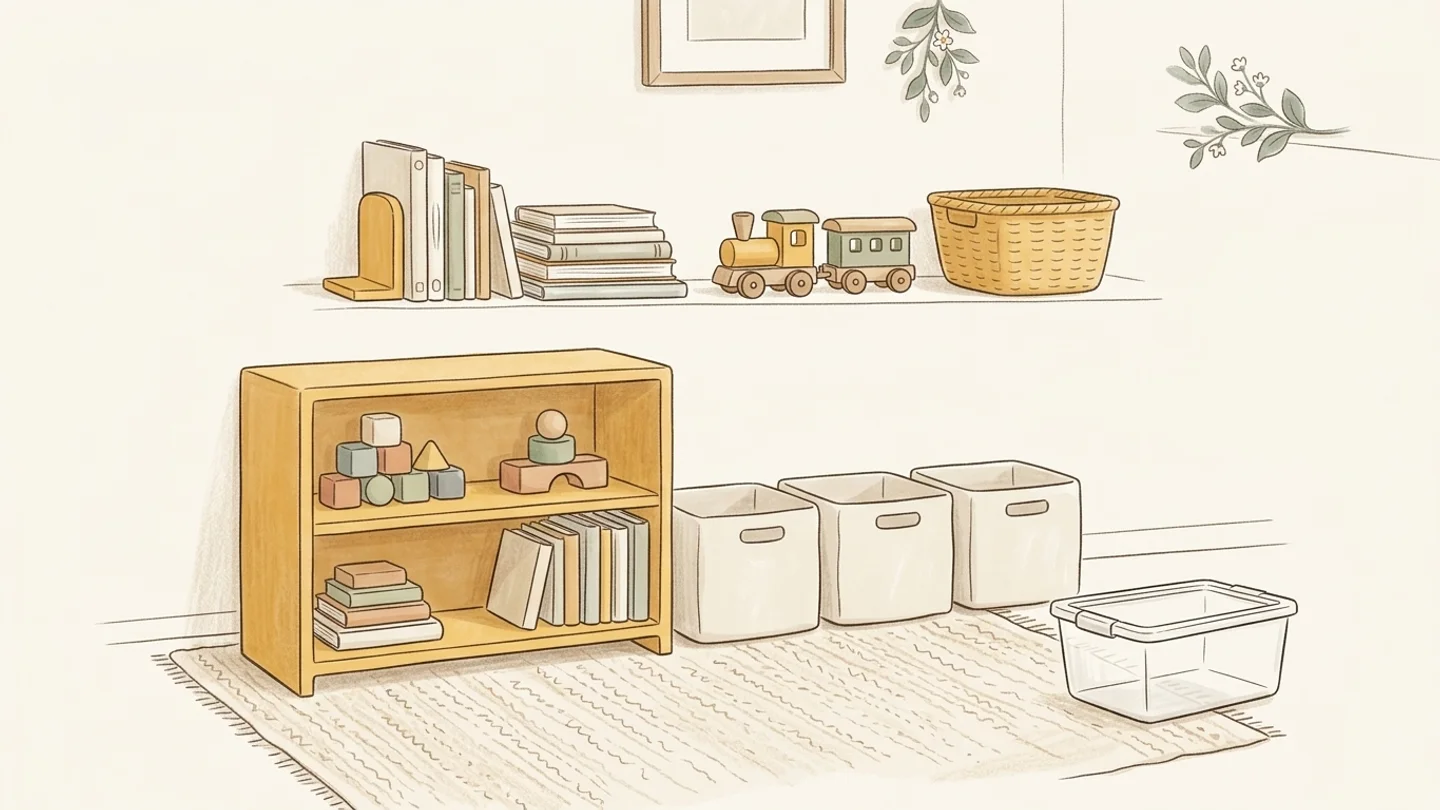
September brings full backpacks, darker late afternoons, and living room floors covered in random plastic bricks, doll shoes, and open sketchbooks. When school routines pick up steam, play areas often catch the overflow. Toys drift from bedrooms into hallways, and finding a matching piece can feel like searching through a lost and found bin. You don't need a total home makeover or expensive storage units to bring things back into balance.
A playful reset treats your toy bins like a friendly neighborhood library. By giving shelves funny spoken nicknames and breaking the cleanup into bite-sized jobs, the room becomes clearer without an afternoon of heavy lifting. It is a quiet, hands-on way to refresh the space together while keeping the tasks ordinary and manageable.
Inventing shelf nicknames aloud
Before picking up a single toy, sit on the rug together and name the zones out loud. Avoid formal categories like miscellaneous action figures or general craft supplies. Instead, pick silly, descriptive nicknames that make everyone smile. A low basket could become Dinosaur Cove, a plastic drawer might be the Castle Garage, and the top bookshelf can be Cloud Tower where bedtime books sleep.
Say these names aloud as you point out the spots. You can even write them on plain masking tape stuck directly to the fronts of the bins. These nicknames are purely an in-person, kitchen-table idea, not an app setting or digital theme. When children help decide that the wheeled vehicles live in the Rolling Meadow, they already know where the green race car belongs when you ask them to put it away.
Giving things humorous titles also takes the edge off tidying up. When a bin is called the Robot Hotel, tucking away three wind-up figures feels like an imaginative little scene rather than a dry chore. If you have an empty shoebox, let a child dub it the Mystery Cave for single puzzle pieces, stray dice, or tiny game tokens that lost their companions during the week.
Setting up the reset tasks in Chorzle
Once your spoken spots are established, translate the cleanup into ordinary, individual chores. In Chorzle, grown-ups create and assign each task to a specific child. Instead of writing one massive chore called clean the entire playroom, create separate, clearly described tasks such as return five books to Cloud Tower, gather six cars into the Castle Garage, or collect puzzle pieces from the rug.
You can assign each task a small Chorzle point value, or mark it as an expected family contribution if that matches your household style. When children mark their chore done on a family tablet or desktop browser, grown-ups review the work and give approval. Points arrive after that grown-up approval when approval is required, keeping expectations clear for everyone. You can learn more about how tasks and routines connect on the features page.
Because every home finds its own rhythm, you choose which jobs carry points and which ones are just part of living together. One child might tackle the floor blocks while another restacks the board game boxes on the bottom shelf. The app simply holds the list so you do not have to hold every moving piece in your head while you cook or fold laundry nearby.
Adapting the sorting for little hands and older kids
Tailor the expectations to the child in front of you. Younger kids do best with single-category sorting and visible targets. You might ask a four-year-old to hunt down only wooden blocks and drop them into a wide, open crate. Sitting nearby and holding the crate steady keeps the work social and clear.
- Toddlers and preschoolers: Hunt for one specific color or size, such as all yellow blocks or soft plush animals.
- Elementary ages: Match card games, stack board game boxes squarely, and pair up wayward art supplies into tins.
- Teens: Tackle the high shelves, match stray charging cables, sort shared board games, or carry bulky storage boxes to the closet.
Older kids and teenagers often appreciate a more independent assignment. They might take on checking that board games have their rulebooks and counters inside, or organizing the shelf holding craft paper and markers. If your kids access their own chores on a shared phone or tablet, you can see how the interface works for kids while keeping their tasks distinct.
Using physical tools alongside your screen
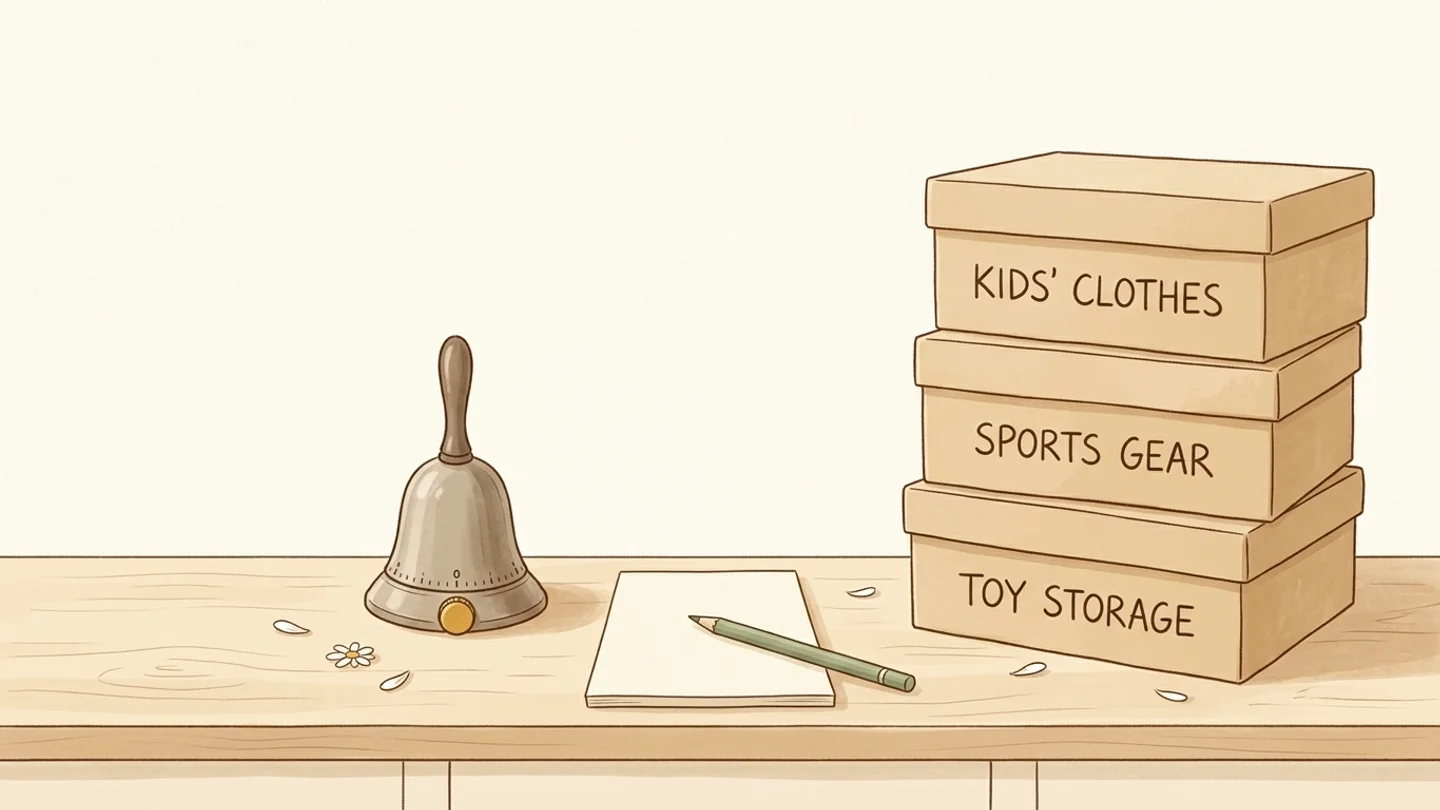
Keep the actual sorting grounded in the physical room rather than relying on a screen to direct every movement. A mechanical kitchen timer sitting on a shelf works wonderfully for a fifteen-minute reset. Set the dial, turn on a favorite playlist on a speaker, and let everyone focus on their hands and the rug. Chorzle stays on the kitchen counter or nearby table as a simple check-in point, not a live game running during the chore.
A room does not need to look perfect to feel lighter, it just needs a clear place where the next game can begin.
You can also keep a cardboard box labeled Stray Mystery Items nearby. Any toy piece whose set cannot be identified goes into the box for forty-eight hours rather than stopping the cleanup in its tracks. This keeps momentum going without getting bogged down by a single missing game token. If you ever want more ideas for family rhythms, browse our articles on The Buzz for inspiration.
Creating a modest experience reward
Chorzle lets families create rewards with clear point costs, and kids spend their own earned Chorzles on the rewards available to them. For an afternoon reset, modest experiential rewards often feel best. You might add a custom reward called Choose Tonight's Bedtime Chapter or Pick the Dinner Playlist for twenty points. These small choices give kids something enjoyable to spend their points on without creating clutter.
Basic care, family meals, stories, and warm affection are always shared freely and are never tied to points. Rewards are simply optional extras your family creates together. Because rewards can be assigned to specific children or shared across the family, you can decide what makes sense for your household budget and routines. Check the pricing page to see how subscriptions support ongoing work on these family tools.
Other simple ideas include picking the flavor of herbal tea before bed, choosing which family board game gets played on Friday night, or deciding who gets first pick of the cozy living room blankets. Each child can choose whether to spend their own points on one of these options or save them for another available reward.
Permission to stop at fifteen minutes
Some afternoons go off track. A child might be worn out after a long day at school, or you might find yourself running low on energy. It is completely fine to pause early. If you planned a fifteen-minute tidy, treat that fifteen-minute mark as a genuine stopping point. If only two bins get organized, celebrate the fact that Dinosaur Cove is tidy and leave the craft shelf for another weekend.
When energy drops, you do not need to rewrite the family schedule or worry about incomplete tasks. Simply put the lids on the bins you finished, thank everyone for their help, and step away. Chores are there to serve your family life, not run it. Keep the stopping point clear, and ask everyone which part they would keep or change next time.
If you know in advance that everyone is exhausted, you can choose a five-minute micro version instead: pick up only items that belong in the kitchen or trash, and leave the toy shelves entirely for tomorrow. Giving yourself permission to stop protects your connection with your kids, which matters far more than an immaculate playroom.
This week, try picking just one messy corner or single bookshelf. Give it an entertaining nickname, create two simple sorting chores in Chorzle, set a kitchen timer for fifteen minutes, and see how much lighter that small corner feels before dinner.
Share the work at home
Chorzle gives your family one warm, shared place for the chore list. New accounts are closed. Join the waitlist for an opening update.
Join the waitlist