Setting Up an Autumn Sock Sorting Studio
October 5, 2026 · 7 min read
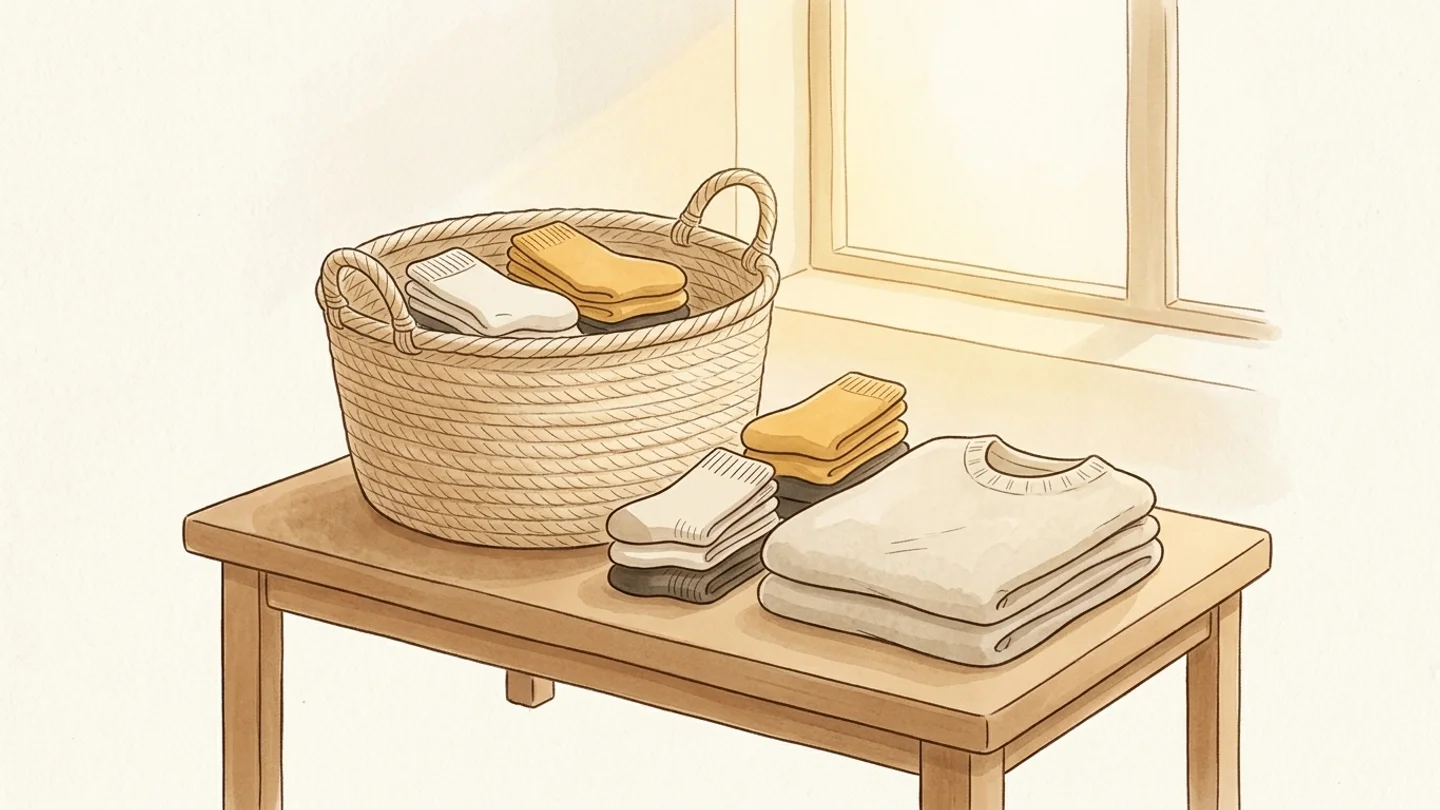
October afternoons often bring tall hampers of heavy knit sweaters, flannel pajama pants, and an undeniable sea of clean socks waiting on the rug. When fresh laundry sits in a plastic basket for days, it easily turns into an intimidating chore that everyone glances at and walks past. It takes up mental space without getting any closer to the dresser drawers.
You can transform that towering laundry pile into an inviting sock-sorting studio right in the center of the living room. With a shared playlist, warm lighting, and clear, tiny jobs for different hands, folding clothes shifts from an isolated weekend chore into a cozy, companionable pause before dinner.
Creating the sorting space together
Begin by bringing the dry, clean laundry into a common gathering area rather than sorting it alone in a dim hallway or utility closet. Clear off a low coffee table, push back the armchairs, or simply spread a large clean blanket across the living room rug. Pouring the socks out into their own shallow basket gives everyone room to sit shoulder-to-shoulder on the floor where they can see what needs to be done.
Set up a relaxed atmosphere before calling anyone over. Dim the overhead lights, switch on a warm table lamp, and set out a couple of comfortable floor cushions so people can stretch out comfortably. This is an ordinary household activity you arrange in your living room, completely separate from any screen time or device tools. Having a defined physical space on a soft rug helps keep the clean items contained while everyone settles into their spots.
You can set out two or three empty canvas bins or shallow cardboard boxes right around the central pile. Labeling one box for grown-up socks, one for kids, and one for lone socks without a mate gives stray items an immediate destination. When people sit down to a space that feels ready and inviting, beginning the task feels like pulling up a chair to a low craft table rather than facing an endless chore.
Matching tasks to different ages
A mixed pile of laundry holds natural jobs for nearly every stage of development. The key is inviting family members into roles that fit their present comfort and coordination, without expecting commercial perfection in the final folds. Different family members can take charge of separate categories so nobody feels crowded out or overwhelmed by the entire mountain of fabric.
- Younger children can hunt through the pile for matching colors, spot bright cartoon socks, or separate thick hiking socks from smaller cotton ankle pairs.
- Elementary kids can roll matching pairs into neat bundles, fold small dishcloths or washcloths, and stack matched pairs into distinct rows.
- Teens can handle folding larger hoodies, flannel shirts, and jeans, or take charge of running sorted bins back to individual bedroom dressers.
When smaller children finish their chosen category, let them decide whether to step back, play quietly on the rug, or help carry light stacks to a low shelf. Older kids might prefer taking sole ownership of pairing up gym socks while listening to their own favorite tracks on a shared speaker. Giving everyone a distinct niche lets the whole group work quietly side by side without stepping on each other's toes.
Adding a soundtrack and simple rewards
Music changes the entire feeling of a repetitive household chore, turning an ordinary room into a small gathering space. Before you dive into the sock basket, let someone pick a short instrumental album, an acoustic folk playlist, or a gentle soundtrack. Playing a familiar ten-track album creates an acoustic backdrop that naturally marks the work as a shared, peaceful pause in the middle of a cool autumn afternoon.
Families who enjoy small incentives can tie this rhythm to modest experience rewards. In our home app, you can build family rewards where children spend their earned points on choosing tonight's bedtime story, picking the dinner music, or selecting which board game gets played after the rug is clear. Keep essential needs like snacks, meals, bedtime care, and family comfort completely separate from points, letting rewards stay lighthearted, playful, and fun.
You might also let a child redeem a small reward to pick the next day's living room playlist or choose the pretend theme for an afternoon craft. Because these rewards focus on simple shared moments rather than material purchases or food treats, they preserve a gentle family spirit. Everyone knows what the plan is, and the reward simply adds an extra layer of warmth to a job well done.
Recording laundry routines in Chorzle
Inside Chorzle, you can add laundry sorting as an ordinary repeating chore assigned to whichever family members are helping out that day. Parents can choose whether the task is simply expected as part of living together or if it carries a modest Chorzle point value. You can explore these setup choices in our features guide to see how simple routines look across the week without cluttering your schedule.
When chores do offer points, make sure to explain that earned Chorzles arrive only after a grown-up checks and approves the finished work when approval is required in your household settings. Checking off the task lets a parent look over the living room rug, confirm the dressers are shut, and offer a quick nod before approving the points. Checking a task off does not immediately award points in every home, which keeps communication open.
For families reviewing our simple subscription pricing, these straightforward parent controls help keep daily routines clear and predictable without complicated rules or artificial gimmicks. Subscriptions directly support Joseph, the independent developer who built the app for his own family, and include direct contact with him for your questions and ideas. That simple structure keeps the focus squarely on your home life.
Folding clothes together reminds us that the quiet, everyday work of a home can be shared with warmth instead of rushing.
Adjusting the view for younger helpers
If you have early readers in the house, a parent can easily select the Young kids presentation under Family profile settings. This keeps a picture-first layout with illustrated chores and large picture buttons for Today, Bees, Rewards, and Dress up. Younger helpers can explore their chores on a tablet using tools made for kids, seeing an illustrated sock or laundry basket icon for their daily tasks.
Keep in mind that some detail screens still contain written text, so an adult may occasionally need to lend a hand when reading notes or specific instructions. Older children and teens can use views that foreground personal planning and calendars, while real administrative authority always stays with the actual parents. Choosing an older presentation stage never grants parent controls, keeping household permissions balanced and safe.
Because the same web app runs smoothly in modern browsers across phones, tablets, and computers, you do not need dedicated family hardware sitting on your counter. A child can check their illustrated tasks on a shared tablet in the living room, while you review approvals from your own phone. The interface adapts cleanly while the underlying point rules and family expectations remain consistent.
Knowing when to wrap up or simplify
Some days arrive with low energy, tired bodies, or busy evening schedules. It is always completely acceptable to stop early. If attention runs thin after ten minutes, pause the music, place the remaining unsorted clothes back into the hamper, and carry whatever completed pairs you have to their dressers. Laundry does not have to be an all-or-nothing marathon to be worthwhile or helpful.
You can read more gentle routine reflections on our family blog whenever you need inspiration for busy household days. Giving yourself permission to stop midway keeps chore time gentle and sustainable. Tomorrow offers another ordinary chance to fold what remains, and taking a quiet break together when people feel tired keeps family relationships front and center.
Noticing quiet effort along the way matters far more than reaching the bottom of the hamper. Simply saying that you appreciate how someone folded five pairs of wool socks or sorted all the striped ones gives real dignity to ordinary work. When children see that their contribution is seen and appreciated, returning to the rug next week feels like an easy, familiar routine.
This weekend, empty just one clean basket onto the living room rug, put on an easy acoustic song, and invite someone nearby to hunt for matching socks with you. A few quiet minutes of folding together is plenty.
Share the work at home
Chorzle gives your family one warm, shared place for the chore list. New accounts are closed. Join the waitlist for an opening update.
Join the waitlist