Setting Up a Weekend Sock-Sorting Studio
June 1, 2026 · 7 min read
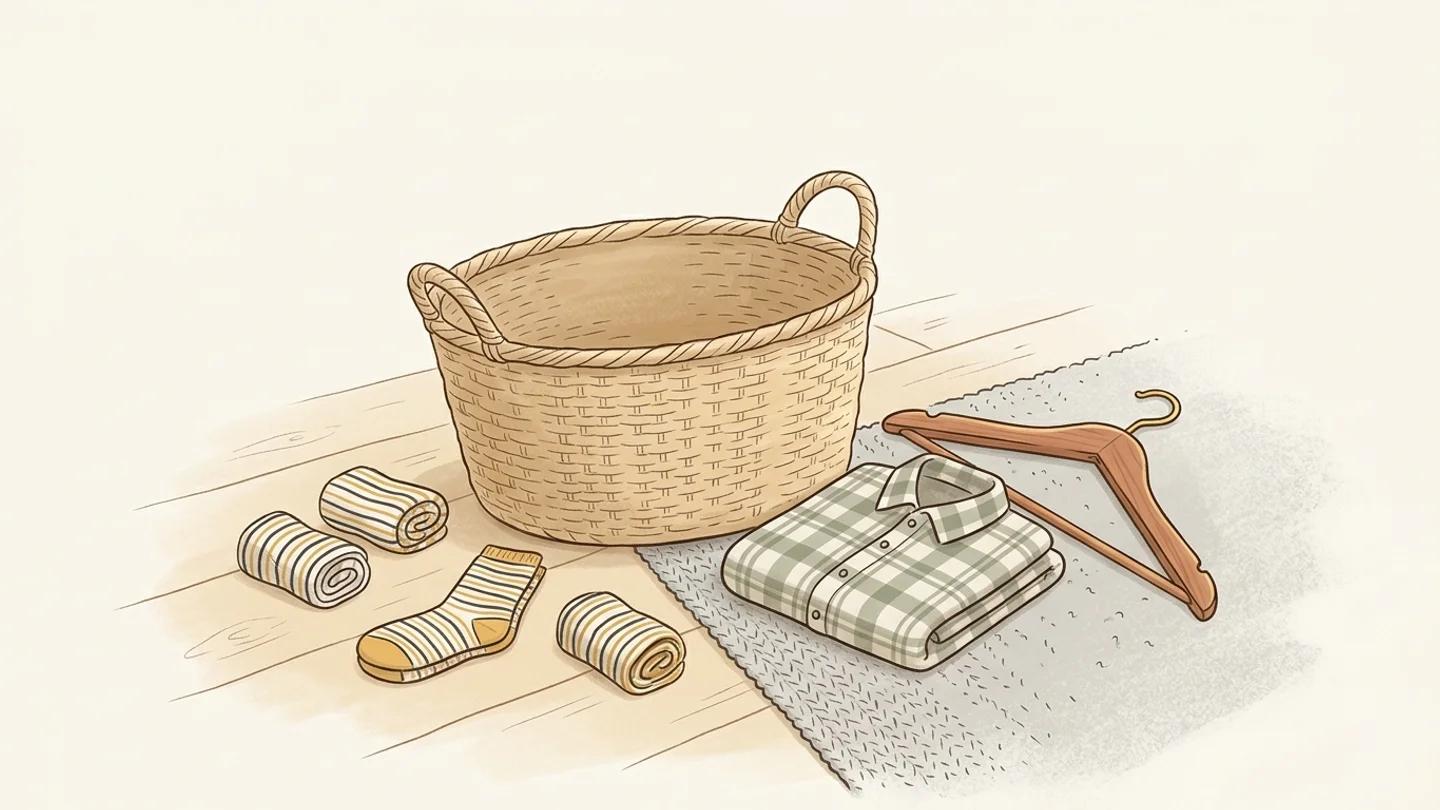
September brings crisp morning air, thicker hoodies, and laundry hampers that seem to double in weight between Friday afternoon and Saturday breakfast. A giant basket packed with mismatched soccer socks, ribbed knit ankle socks, and cozy fleece pajamas often sits in the hallway for days simply because tackling it feels like an endless solitary chore. When laundry stays behind a closed utility room door, other family members may not know which part needs a hand.
You don't need a complicated household formula or rigid chart to change that feeling. Transforming everyday folding into a friendly sock-sorting studio takes ordinary clean clothes out of hiding and spreads them across the living room rug where everyone can gather. With a pleasant playlist on the kitchen speaker, clear mini-stations, and four favorite songs as your optional stopping point, your family can try sharing one small part of the weekend laundry.
Clearing the Studio Floor and Setting Stations
The secret to a relaxed folding session is physical room to move. When fresh clothes remain jammed inside a deep plastic hamper, small hands can't tell what they're grabbing, and items quickly end up crumpled on the floor. Tip the clean laundry directly onto the center of a wide living room rug or a cleared coffee table. Spreading a small pile into a flat layer makes the items easier to see, with room to sort them into little islands before folding.
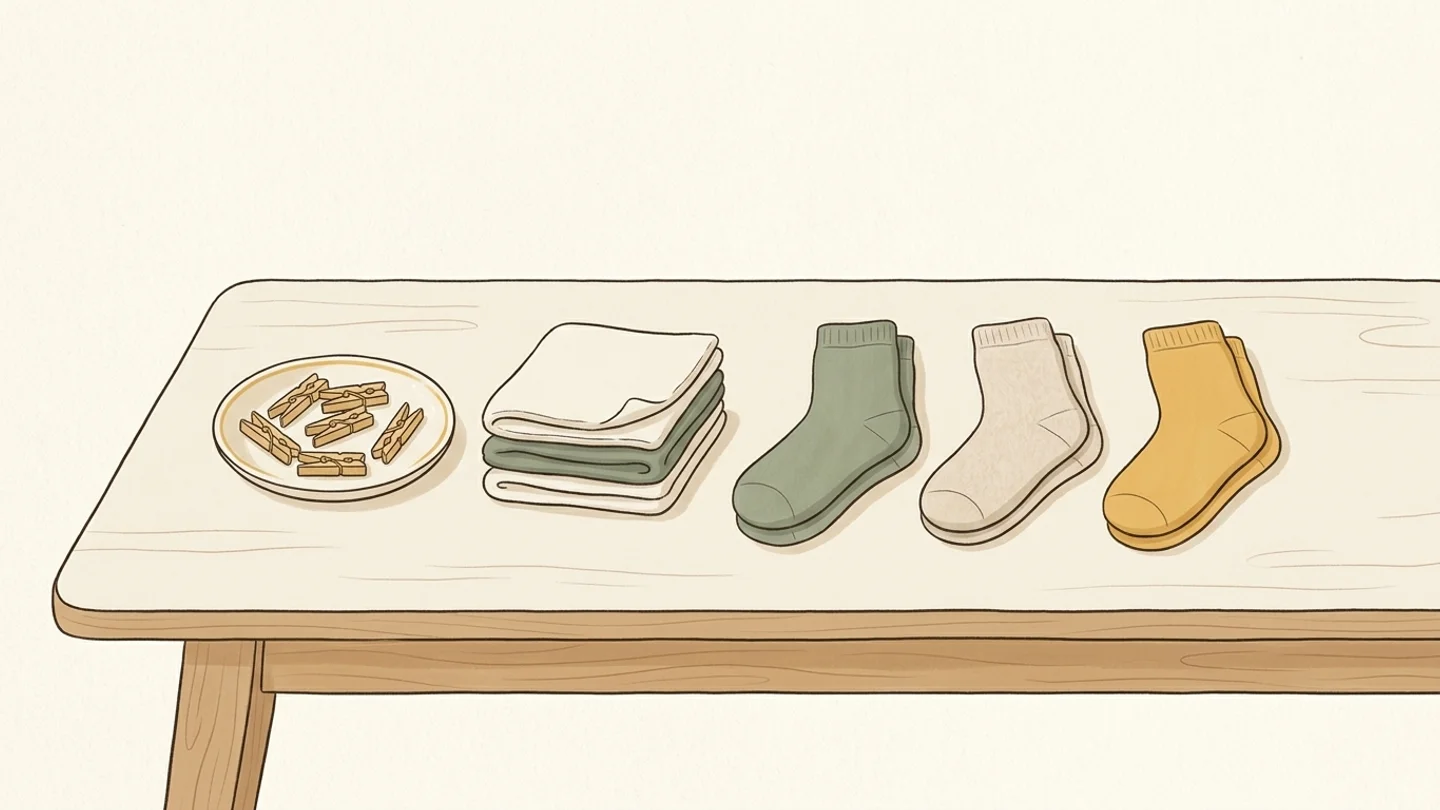
Place two or three shallow cardboard boxes, baking trays, or canvas bins around the edges of the room to serve as drop zones. One box can receive thick athletic socks, another holds school uniform ankle socks, and a third collects kitchen dishcloths and pillowcases. Giving each child their own distinct station keeps knees and elbows from bumping while letting everyone watch the central pile shrink in real time. It feels entirely different from standing alone over an ironing board in a cramped hallway.
You can also set out a small empty wooden bowl or basket in the middle for the inevitable mystery items: that single polka-dot sock missing its partner, a stray button, or an inside-out glove. Having an official spot for orphans keeps the momentum going so kids don't freeze up trying to solve every mystery immediately.
Choosing the Soundtrack and Rhythm
Music establishes the tone faster than any verbal instruction. This isn't an app timer or an in-screen competition: it's simply your ordinary family stereo, a portable Bluetooth speaker, or a tabletop kitchen radio playing two or three albums that everyone likes. You might invite one of your kids to be the studio disc jockey for the morning, selecting mellow acoustic guitar tracks, autumn instrumental pieces, or familiar singalong tunes while everyone takes their places on the carpet.
Agree on a friendly, natural finish line before anyone presses play. Try stopping after four favorite songs, even if some laundry remains. If the basket empties sooner, finish early. Choose the playlist together, and leave room to ask for help with an awkward fold. If you enjoy discovering easy household rhythms like this, our collection of practical ideas on The Buzz offers plenty of simple ways to make home tasks friendlier.
Keep the volume at a level where conversations can wander naturally. A folding session works best when it doubles as a calm pocket of weekend connection, giving people room to chat about a school project, a soccer play from yesterday, or plans for lunch while their fingers roll cuffs.
Matching Jobs to Hands and Ages
Clean laundry offers a wonderful variety of textures and shapes that naturally match different ages, attention spans, and motor skills. Preschoolers often love visual matching, while older kids usually prefer taking ownership of their own garments so they can fold and store them according to their personal bedroom systems. Dividing the jobs clearly before diving into the pile keeps everyone focused on one manageable job.
- Younger children can be color scouts, finding all the black sports socks, pairing striped designs, or smoothing cotton washcloths into flat squares on the floor.
- Elementary kids can roll matched pairs into snug cuff bundles, fold long-sleeve tees using a flat cardboard folding guide, and stack bedroom pajamas into neat bundles.
- Older kids and teens can fold fitted sheets, shake out heavy hooded sweatshirts onto hangers, or manage final delivery routes to bedroom dressers and bathroom linen closets.
Offer each child a specific job instead of a broad instruction like 'help with laundry.' A younger child might look for bright wool socks, while a middle schooler chooses whether to fold jeans or deliver clean stacks. Ask which job they would like to try, and be ready to demonstrate the first item together.
Recording Ordinary Chores in Chorzle
In Chorzle, you don't need complicated charts or tricky calculations to track this routine. Grown-ups simply create and assign an everyday chore such as 'Sort and match sock basket' or 'Deliver bedroom laundry stack.' You choose whether the chore carries point values or is marked as an expected household contribution. You can put it on a repeating schedule so it appears every Saturday morning without requiring paper checklists taped to the refrigerator.
When your kids complete their sorting stations, they can sign in from an ordinary tablet, phone, or home computer browser to mark the chore done. You can learn more about how our core features keep setup straightforward on any device your family already owns. If you've configured the task to require grown-up approval, points arrive in your child's balance only after you give that quick confirmation.
That quick pause for approval gives you a natural moment to walk over together, admire the straight stacks on the coffee table, and check that socks actually landed in the dresser drawers rather than on the bedroom rug. It turns an app checkmark into an in-person moment of shared appreciation.
A shared basket feels lighter when everyone sits on the same rug to empty it.
Modest Rewards and Genuine Noticing
Points in Chorzle can be saved toward modest family experience rewards that you design together at your kitchen table. A memorable reward doesn't have to cost money or involve trips to a store. It could be choosing the Saturday night family movie, picking the book during your usual bedtime reading, or selecting the music at Sunday breakfast. Everyone still gets to join family time, enjoy meals and receive care, whatever their point balance. You can discover how Chorzle for kids lets children view their earned points and choose from available rewards assigned to them.
Remember that point values always arrive after grown-up approval when approval is required, so the routine naturally encourages a quick check-in before children head off to play. Alongside the app, noticing effort aloud creates warmth that points alone can't replicate. Instead of offering general praise like 'great work,' describe the exact helpful action you noticed across the rug.
You might say, 'I noticed how carefully you lined up the seams on those hooded sweatshirts,' or 'Thank you for carrying your sister's stack upstairs without waiting for me to ask.' Specific recognition tells children that their time and care made a visible difference to the whole household.
Permission to Keep It Short and Simple
Some weekends simply go sideways. School sports run late, someone catches an early autumn head cold, or everyone feels completely drained by Sunday afternoon. When household energy is running low, don't try to force an elaborate laundry studio. You have full permission to pull out only six pairs of sports socks, fold two cozy blankets, and let the rest of the pile wait until Monday evening.
Chorzle is designed to fit your real life, not impose a rigid method on your home. If a weekend feels unusually hectic, agree in person to sort a smaller pile or work side-by-side. Keep the shorter version optional, and stop when your family has had enough. The goal isn't a showroom linen closet or perfectly aligned drawers, but creating an environment where running a home feels shared, patient, and collaborative.
Try a gentle approach and see which parts suit your household. You can keep the music, skip the stations, or return to a simpler way of putting clean clothes away. If a sock remains without a partner at the end of the morning, tuck it into the basket and let it wait for next weekend.
This Saturday, pull one clean basket from the dryer, set it in the middle of the living room floor, turn on a favorite album, and invite everyone to match just three pairs of socks together.
Share the work at home
Chorzle gives your family one warm, shared place for the chore list. New accounts are closed. Join the waitlist for an opening update.
Join the waitlist