Hosting a Calm Fitting Room for Outgrown Clothes
November 2, 2026 · 6 min read
It's November, and the sweater drawer is starting to argue with you. Sleeves stop above wrists. A favorite pair of trousers has quietly become a pair of shorts. Somewhere under it all is the coat you'll need next week, if only you could reach it.
Sorting outgrown clothes can turn into a long afternoon of tugging and sighing. This week, try something softer: a calm fitting room at home. Your child tries on a small pile, sorts each piece into keep, pass on or mend, and a grown-up makes the final decisions. It's short, cozy and finished before anyone runs out of patience.
Setting Up Your Fitting Room
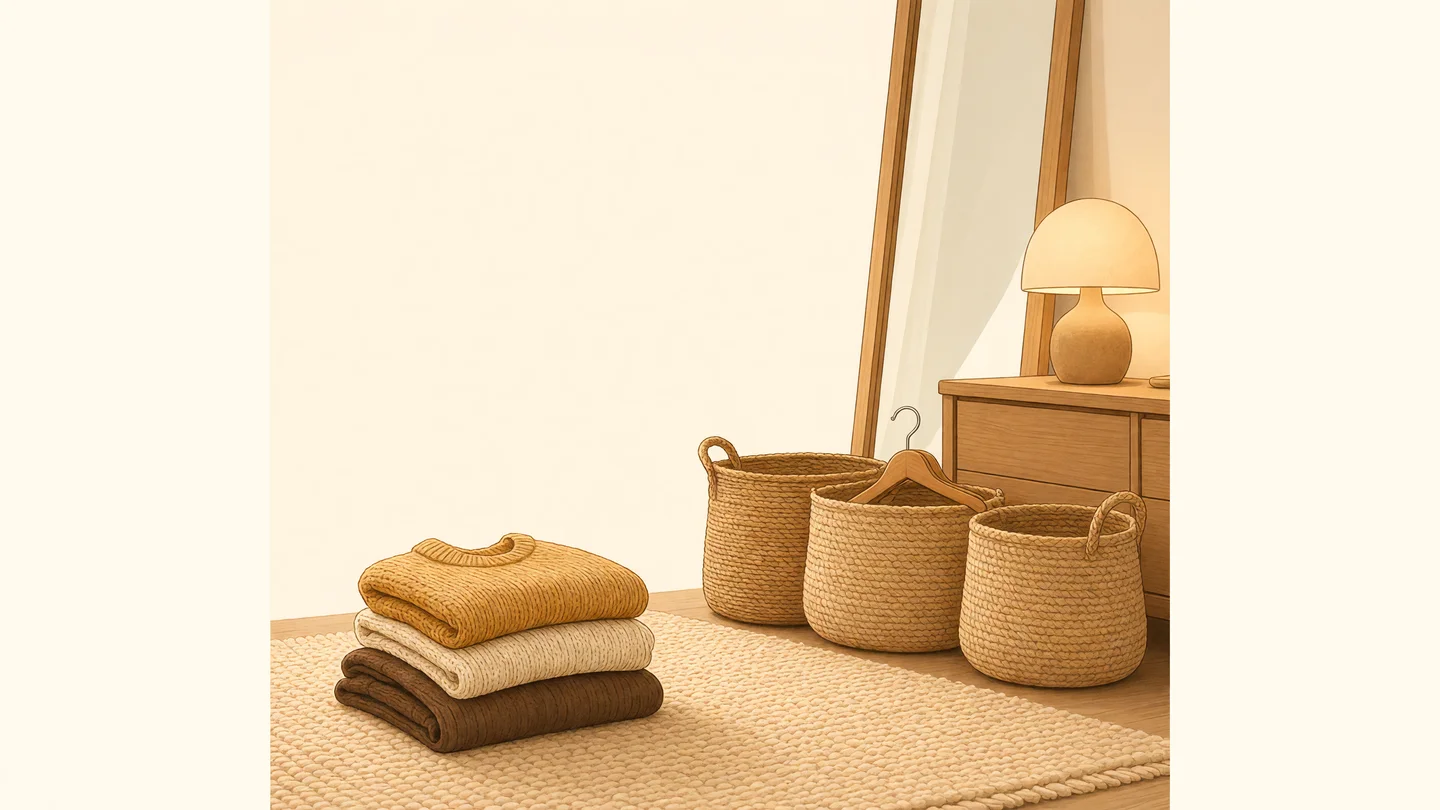
You don't need much. Pick a corner with a little floor space and decent light, like a bedroom rug or the end of a hallway. Gather what you already have and lay it out before your child arrives, so the space feels ready and welcoming.
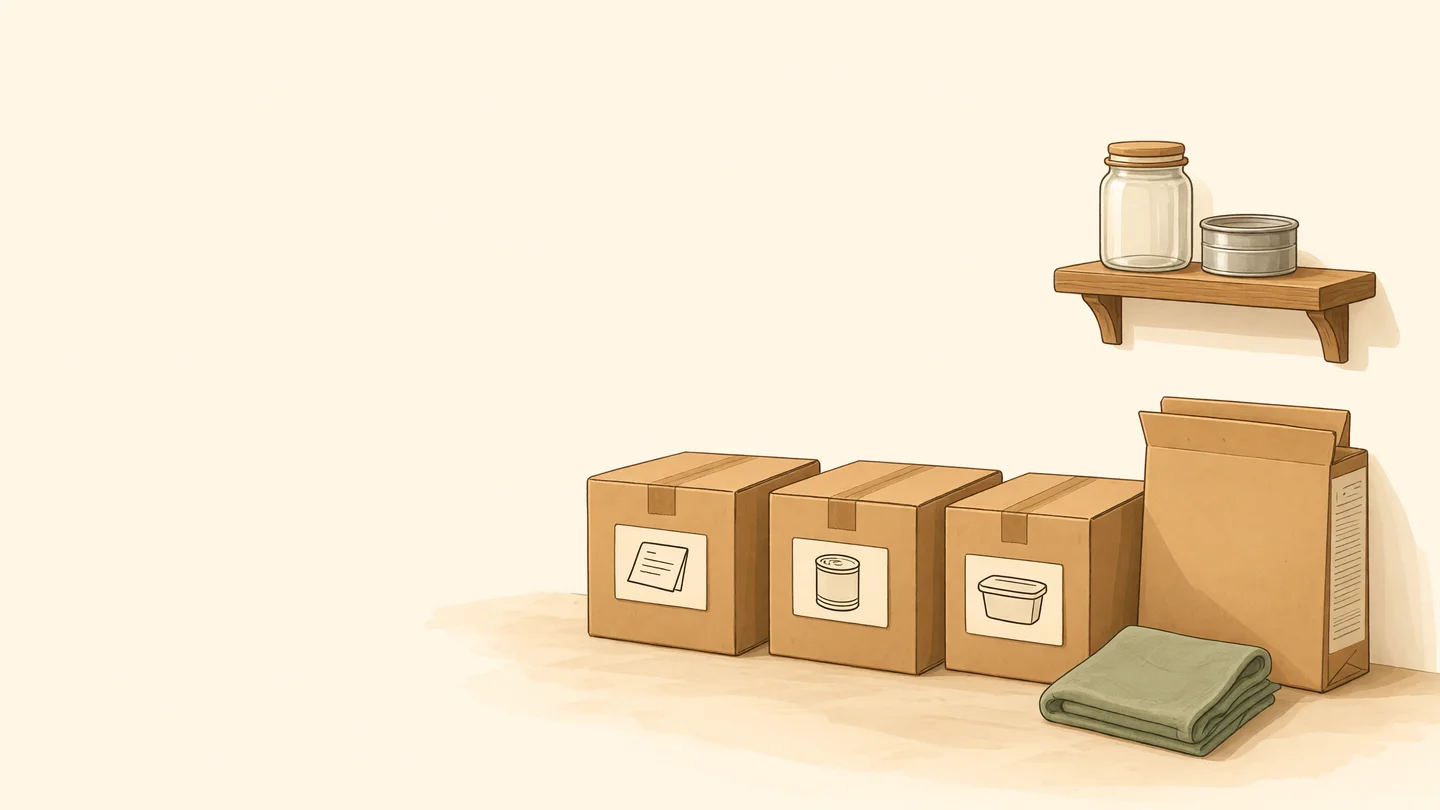
- Three baskets, boxes or pillowcases, one each for keep, pass on and mend
- A mirror, leaning against a wall or on a closet door
- A small pile of clothes, about eight to ten pieces, pulled from one drawer or shelf
- A paper bag for anything that leaves the house
- A lamp or a sunny window, and maybe a favorite playlist
Keep the pile small on purpose. Ten pieces is plenty for one sitting, and the session runs about twenty minutes. If you have more to sort, leave it for another day rather than stretching this one. A little label on each basket, drawn or written, can help a child remember which basket means what.
Talking Only About Fit and Comfort
The heart of the fitting room is the language you use. Talk only about how a piece of clothing fits and feels, never about weight or bodies. Questions about the clothes keep the attention on the clothes: Can you lift your arms easily? Do the sleeves reach your wrists? Is the waistband comfy when you sit down? Does the fabric feel scratchy?
It also helps to keep each child's fitting room their own. Avoid comparing siblings, and avoid phrases about who wore something first or who it should go to next. If a piece might suit a younger brother or sister someday, you can quietly set that aside later, out of the session.
A sleeve that's too short is just a sleeve that's finished its job.
Your child gets to say how a piece feels. You get the final say on where it goes. That keeps things simple: their comfort counts, and nobody has to argue a case.
Keep, Pass On and Mend
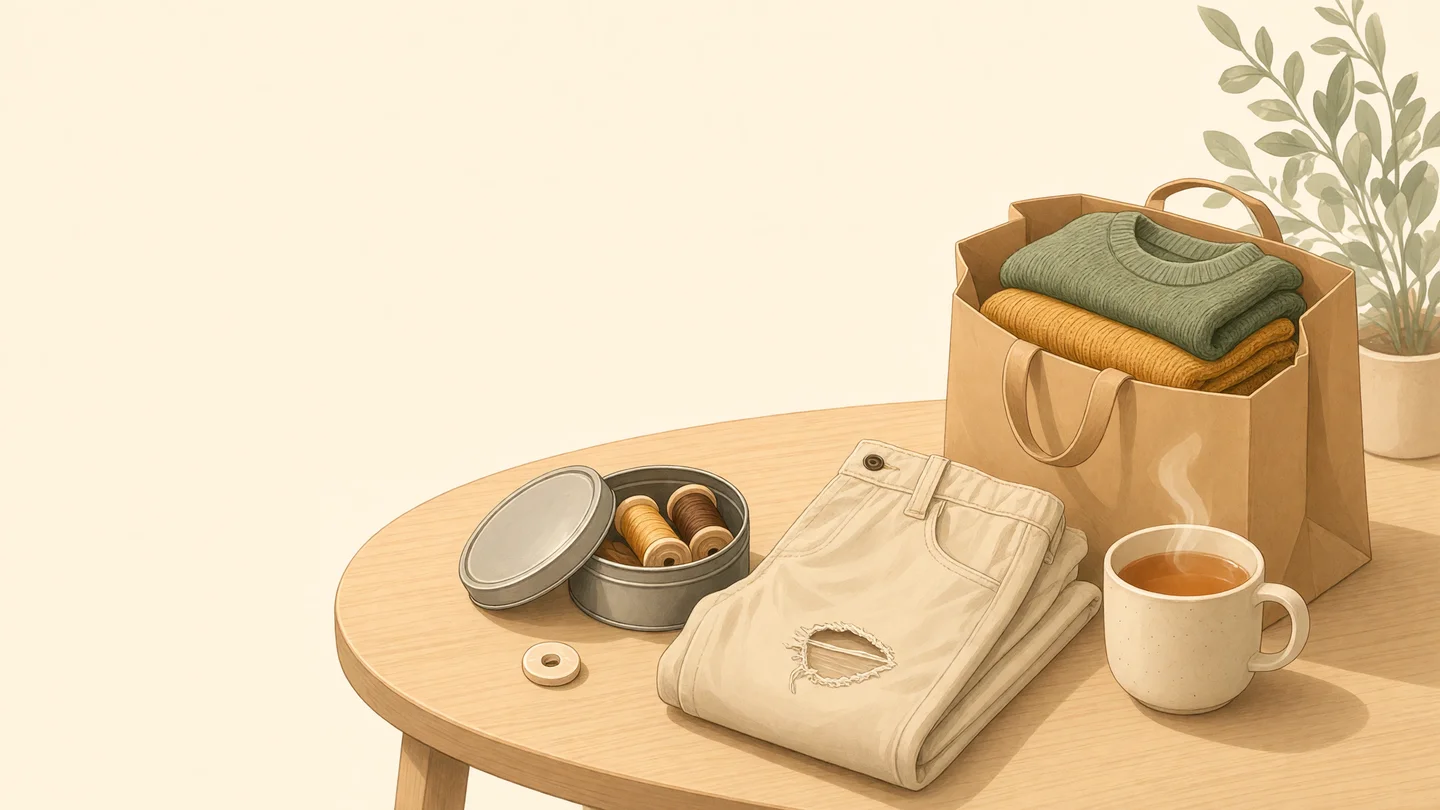
Each piece goes on, gets a quick look in the mirror, then heads to a basket. Keep is for things that fit and feel good. Pass on is for anything outgrown, worn thin in a way that can't be fixed, or simply not loved anymore. Mend is for clothes that still fit but need a button, a small stitch or a patch on a knee.
Your child can suggest a basket, and you confirm or move it. A gentle way to say it: Thanks for trying that, I think it belongs in pass on. If you're unsure, a fourth spot called maybe can sit beside the baskets, and you decide on those later. Some families like to give each pass-on item a little send-off, like folding it neatly or saying where it might go next, such as a donation box or a cousin's family. Keep that light and only if it suits you.
Recording It as Ordinary Chores in Chorzle
The fitting room itself is a home activity, not an app mode. What you can record in Chorzle are the ordinary chores around it. A grown-up can create chores like Sort my clothes pile, Fold the keep basket into my drawer, and Bag the pass-on clothes, assign them to a child, and give them a point value or mark them as just expected. You can see how chores and schedules work on the features page.
Your child can mark a chore done when it's finished. If you've set that chore to need grown-up approval, the Chorzles arrive after you approve it, not the moment it's checked off. That's a nice chance to glance at the baskets together first.
For a modest reward, add something like Choose the next family game, or Pick tonight's story or song. Your child spends their own earned Chorzles on it. Family game night itself stays open to everyone; the reward is simply getting to pick.
Little-Child and Teen Versions
For little ones, shrink everything. Five pieces instead of ten, and baskets marked with simple drawings: a heart for keep, a gift box for pass on, a needle for mend. Let them do the fun parts, like dropping clothes into baskets and checking the mirror, while you handle buttons and decisions. If your youngest uses the picture-first view for Young kids, the illustrated chores and big picture buttons may help them find their task, though some detail screens still have text and may need you nearby. More on that is on the page for kids.
For teens, hand over more of the running. They might try things on alone, sort their own pile, and bring you only the maybe basket and the pass-on bag for a final look. A teen might also enjoy taking on Bag and label the pass-on clothes as their chore, or planning where the mend pile goes next. You still make the final calls, but it can feel more like a quick check-in than a session.
The One-Drawer Fallback and Tired Days
Some weeks are full, and that's fine. As an optional shorter version, do just one drawer: the sock drawer, the pajama drawer or the sweater shelf. Same three baskets, same comfort questions, about ten minutes instead of twenty. That's still a real bit of progress.
You can also stop at any point. If someone is tired or cranky, fold up the baskets and say you'll pick it up another day. On a tired day, do less together: you hold up each piece, they simply point to a basket, and you do the folding. Clothes that never got tried on can wait in their drawer.
If you added the sorting as a one-off task with a due date, a parent can change or clear that date with the planning controls. That's just moving the plan, not a way around approval. For more gentle ideas, browse other posts on The Buzz.
This week, try one small thing: pick a single drawer, set out three baskets, and invite your child to your calm fitting room for ten minutes. Ask only how things fit and feel, make the final calls yourself, and let them choose the next family game or story if it suits your family. If you'd like to record the sorting and bagging as chores, you can check current signup details on the download page. Either way, enjoy the warm sweaters that still fit.
Share the work at home
Chorzle gives your family one warm, shared place for the chore list. New accounts are closed. Join the waitlist for an opening update.
Join the waitlist