The Race to the Last Chore
May 27, 2026 · 6 min read

Here's a small thing worth noticing. Some evenings, the last chore on the list becomes the one everybody wants.
It doesn't always go that way, and that's fine. A chore is still a chore, and plenty of nights nobody is chasing anything. But every so often a kid will check what's left, spot the one task still sitting there, and go knock it out before bed. Nobody asked them to. It was just there, and finishing felt good.
If you've watched that happen at your own kitchen table, you already know the feeling. It's a quiet, funny little win, and it tends to sneak up on you.
Why finishing pulls so hard
Most of it is simple. Finishing is its own small reward. A list with one thing left is a list that's almost done, and "almost done" is a surprisingly strong pull, for grown-ups every bit as much as for kids. We're all a little allergic to leaving the last one undone.
Chorzle just gives that feeling something to hold onto. There are a few Chorzles to earn, and a honeycomb hive that fills in cell by cell as the week goes. The last chore stops looking like a leftover. It starts looking like the last piece of something, and the last piece is always the satisfying one to place.
A list with one thing left isn't really a chore anymore. It's almost a game.
A few ways to lean into it
None of this needs a system. It's mostly about keeping the good feeling within easy reach.
- Keep the finish line in sight. Kids chase what they can see, so a short, clear list beats a long one. The end has to actually be in view.
- Let small things count. The last chore doesn't have to be a big one. Wiping the table or feeding the cat is a fine note to end on, and little wins are still wins.
- Don't turn the race into a rule. The nice part is that it was the kid's own idea. Demand it every night and the fun quietly leaks out.
Make it clear what finishing means
Before a race begins, agree on the task. "Tidy the kitchen" could mean putting away a cup, clearing the whole table, or cleaning every surface. "Put the dinner plates by the sink and push in the chairs" gives everyone the same picture. You can point to the finished job without adding another requirement just as someone reaches the end.
Imagine two children looking at the evening list. One chooses the shoes by the door, and the other chooses the books on the sofa. A quick demonstration of where the shoes and books belong may be all the explanation you need. If either job needs an adult, say so at the beginning. Getting help is part of finishing, not a reason to lose a turn.
Keep anything sharp, hot, heavy, or involving cleaning products out of a hurried game. A grown-up can handle those jobs at a comfortable pace. Even with an ordinary task, stop the race if speed starts to matter more than doing it safely. The dishes can wait for someone to walk across the kitchen.
Give everyone a way to join in
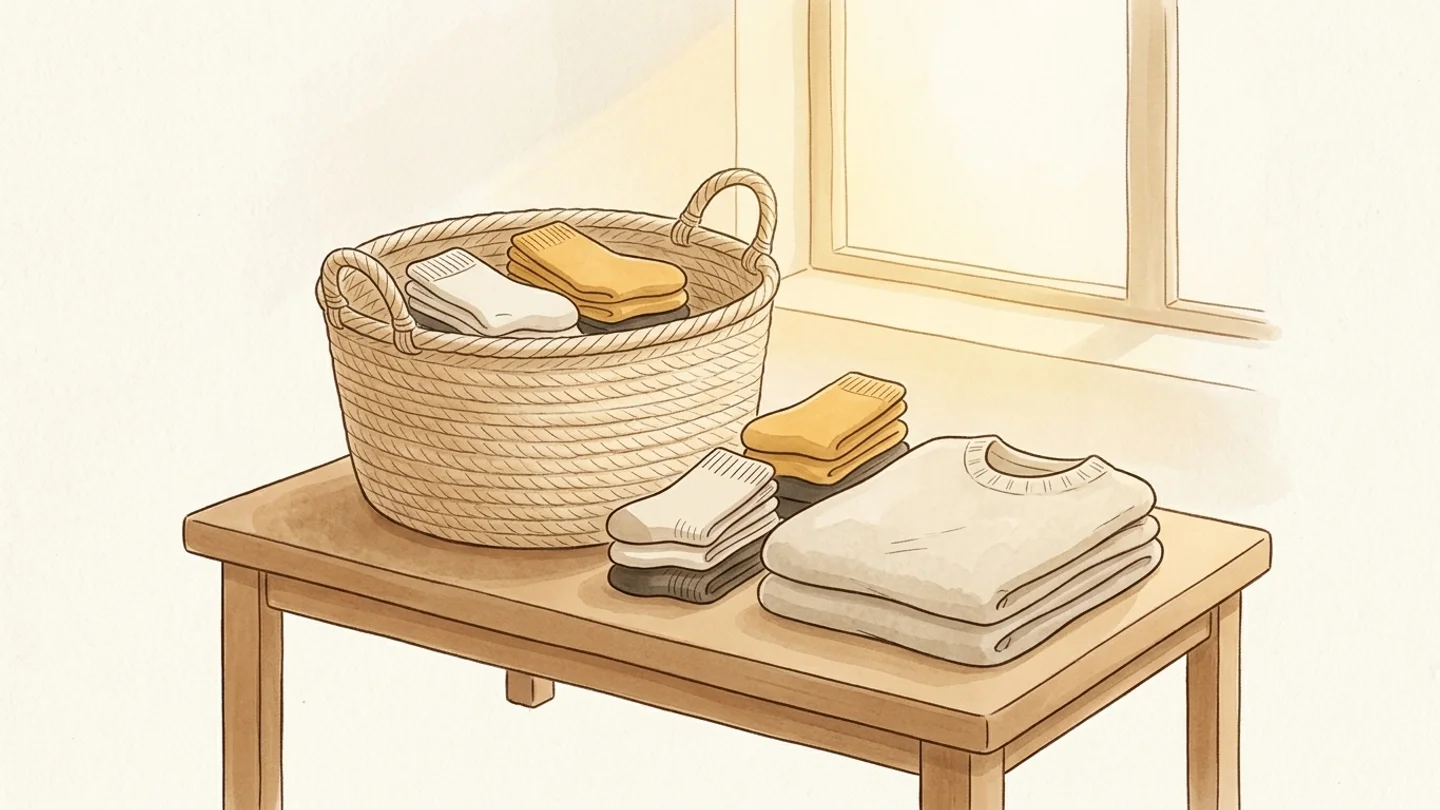
The last chore doesn't have to have one winner. You might split it into two parts, take turns choosing it on different evenings, or work together until the list is clear. One person holds the basket while another gathers the socks. An adult folds the big towels while a younger child matches the washcloths.
Different people also want different amounts of excitement. One child may love a countdown while another would rather work quietly. Offer the quiet version without presenting it as the less interesting choice. "Would you like company, music, or a little space?" is a useful question when you aren't sure what kind of evening someone is having.
If two people want the same job, decide who takes it before anyone starts. You could let the person who didn't choose yesterday pick today. You could also put both names beside a shared task. There isn't a perfect arrangement to discover. There is an arrangement everyone can understand tonight, and you can revisit it tomorrow.
Keep the finish line where you put it
A tempting moment arrives when the house is nearly tidy: perhaps everyone has enough energy for one more job. Before adding it, remember what the original list promised. If finishing always reveals another chore, a child may reasonably wonder when finished actually means finished. Put tomorrow's ordinary jobs on tomorrow's list.
Something unexpected may still need attention. A spilled drink isn't going to wait politely for the next list. Explain the difference in plain words: "We finished our jobs. This spill just happened, and I need a hand with the towels." You can ask for help without pretending the earlier work wasn't complete.
The same care applies to rewards. If you agreed on a particular number of points for a chore, keep that agreement separate from whether someone won the race. Avoid introducing a surprise bonus for the fastest person or changing the reward after the job is done. The game can stay optional while the household agreement stays understandable.
Let the moment be small
When the list is finished, a simple acknowledgment is enough. "The hallway is clear. Thanks for putting those shoes away" names the work without turning it into a speech. You don't have to photograph the moment, start a new chart, or make tomorrow's evening follow the same script.
You might close the list and sit down together. You might carry on with baths, homework, or the next ordinary part of the night. The useful part is that the work had an end, and everyone knows where that end was. A cheerful evening doesn't need a bigger celebration to count.
If the last chore starts causing arguments, retire the race for a while. Take turns, help together, or let an adult finish it tonight. You can keep the short list and the clear instructions even when the playful part doesn't fit. There is no need to defend a game that nobody is enjoying.
And for the nights the clock wins
Some evenings everyone runs out of time before they run out of chores, and a kid can take that harder than you might expect. That's worth a soft landing. A chore that didn't get done can be forgiven, quietly credited, or simply left for the morning.
Tomorrow always brings a fresh list. The streak that matters most isn't a perfect record. It's the easy, unbroken sense that this is just how the house works.
So no, not every night is a race, and it was never meant to be. But when finishing feels like a small, good thing, you may notice the last chore of the day quietly becoming the one nobody minds doing. That's a lovely place for a chore to end up.
Share the work at home
Chorzle gives your family one warm, shared place for the chore list. New accounts are closed. Join the waitlist for an opening update.
Join the waitlist